About Us / History
The Glen Waverley Railway Social Club was first established by a couple of young and keen Train Drivers and Guards in approximately 1981 with the intent of unifying all staff at Glen Waverley.
Like a number of other small clubs, the Club is a subsidiary of the Victorian Railway Institute and has been going strong ever since.
This website is still very much in its infancy stage and whilst it will keep you informed on current events, we are also very eager to capture the historical data applicable to the line and the station environment.
As such, we would appreciate any historical material that can be included on this web page.
You can email this information directly to; gwrsc@yahoo.com.au
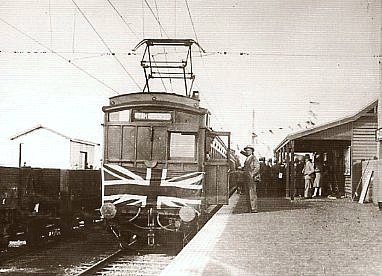
First electric train to depart Glen Waverley.
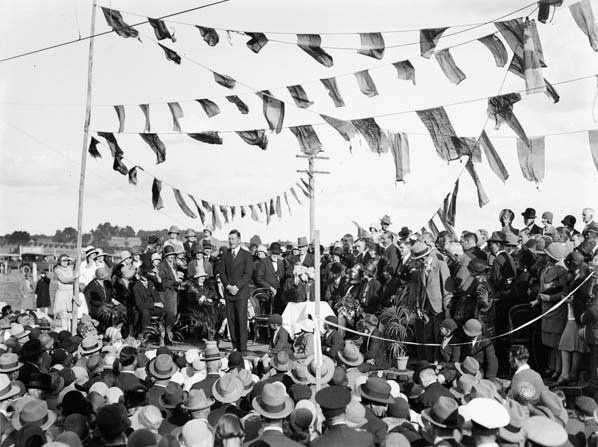
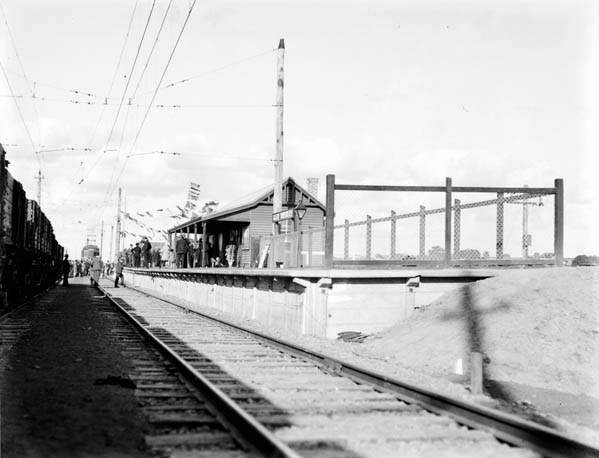
Grand opening of Glen Waverley Station 5 May 1930.

Old Glen Waverley signalling diagram.
Glen Waverley Station was opened on the 5th May 1930. The station was originally built adjacent to Springvale Road until 1963 where it was relocated west to its current location. The old station building was shifted to Epping station which became a new suburban terminus in 1964. Glen Waverley station was upgraded to a premium station on the 16th August 1995.

A brief description of the signalling history of East Malvern follows.
The new station between Darling and Glen Waverley (shown as Karnak Road in the working timetable) was named Eastmalvern and opened for parcels and passenger traffic on Sunday 3 February 1929. The station was worked under caretaker conditions and was supervised by the travelling Stationmaster for the Glen Iris line. An electric train service is shown as operating between Flinders Street and Eastmalvern. Up& down arrival home signals, one up departure signal and two down departure home signals were provided. The points at each end were secured by Plunger Lock. The line between Darling and Eastmalvern was workrd under the rules for Lever Locking and Track Control system of signalling on single lines of railway.
The portion of line between Eastmalvern and Glen Waverley opened on Monday 5 May 1930. A down Home signal and plunger locked points were provided at Glen Waverley. At opening, the points at each end of the loop siding at Mount Waverley were rodded to derails in the siding and secured by Staff Locks. Mount Waverley was commissioned as a crossing station between Eastmalvern and Glen Waverley on 14/11/1955 and an interlocking machine was provided on the up platform. The points at Mount Waverley were operated by a double wire pull mechanism. The interlocked signal frame was removed when the line was duplicated to Syndal on 7/09/1958 and CTC worked from the CTC control panel at Eastmalvern was provided. In order to minimise the amount of work on the night of the changeover, the double wire mechanism at Mount Waverley was temporarily removed during the off peak period, the points clipped, and the electric point machine connected. During this period, the point machine was wired up and tested. Before the evening peak, the double wire pull mechanism was restored, and the new electric point machine was laid aside on timber packing with its wiring intact for subsequent testing.
A photo of the up end of Mount Waverley when it was a crossing station during the Staff & Ticket days is attached.The line between Eastmalvern and Glen Waverley was originally worked under the Rules for Staff & Ticket, and unless instructions were issued to the contrary, the Driver of every train was to be in possession of the Staff. The instructions called for the Driver to retain the staff in his possession when changing ends on arrival of his train at Glen Waverley or Eastmalvern. When a Driver was relieved, he was to personally hand the Staff to his relief. On arrival of the last down train at Glen Waverley each night, the Staff was inserted in the holder of the Staff Box in the station office.
In the mornings, the Train Staff was to be released from the Staff Box, and the Transportation Branch employee accompanying the train was to ensure the Staff was in the Drivers possession prior to departure. At Eastmalvern, trains were ordinarily arrived into the Dock Road. A maximum speed of 15 MPH was not to be exceeded when passing over the points at Eastmalvern or Glen Waverley. The Metropolitan Superintend was responsible for seeing that Buffer Stops at both locations were equipped with red buffer lamps. The maximum speed for the line was 40 MPH.
On 5/9/1954, an interlocking machine was provided at Eastmalvern located in a signal bay on the up platform and the plunger locking abolished. The Dock road was also abolished. Up and down Distant Signals were provided The signalling arrangements are shown on Signalling Diagram No. 1/54.(attached).
On 24/06/1956, the line between Darling and Eastmalvern was duplicated and the two position signals and the Lever Locking and Track Control System between those two locations was replaced by three position Automatic Signalling. Crossovers were provided at the up end of Eastmalvern and the down end of Darling.
On 7 September 1958, the line between the up end of Mount Waverley and the up end of Syndal was duplicated and three position signalling was provided together with the remote control of points and signals at Mount Waverley, Syndal and Glen Waverley. The Train Staff & Ticket System was abolished. The locations between East Malvern and Glen Waverley were operated from a CTC control panel at Eastmalvern.
At the up end of Glen Waverley yard, a switch lock was provided for the main line points which were rodded to catch points in the siding and operated by a small point lever. The switch lock was electrically released by No. 27 lever on the control panel at Eastmalvern lieu of the usual releasing track. This greatly simplified the signalling arrangements at Glen Waverley and by locating the Home arrival and departure signals a train length clear of the switch locked points, trains could be shunted from the platform to the sidings whilst a second train was entering the single line section at Syndal. Photographs show Glen Waverley up end points pre and post the installation of CTC.
The control panel cabinet at Eastmalvern was fixed in the signal bay immediately to the right of the the existing 20 lever interlocking machine and can be seen in position in the photograph
A total of 16 3 position light signals were installed throughout the territory. Of these, 7 were Home Signals. The position of each signal in the field was determined by the Signal Construction Engineer in association with a Block & Signal Inspector and a Foreman Driver.
The CTC control panel at Eastmalvern was to be short-lived. The section from Eastmalvern to Mount Waverley was duplicated and opened for train operation on 28/06/1964. The crossover at the up end of Eastmalvern was abolished together with the interlocking machine. The control panel at Eastmalvern remained in use for the purpose of operating the single line section from Syndal to Glen Waverley.
An emergency crossover was provided at Mount Waverley at the up end of the station secured by Annett lock. The key was secured in a case in the station office. Withdrawal of the key resulted in Automatic signals DG 565 and DG 582 being secured at the stop position.
On Sunday 29 November 1964, the line between Syndal and Glen Waverley was duplicated and the CTC control panel at Eastmalvern was abolished. A control panel was provided at Glen Waverley. Automatic Operation of the points and signals at Glen Waverley was provided when the sequence of trains was an up departure followed by a down arrival etc. The panel has to be switched in for shunts, docks or two consecutive down or two consecutive up departures, or when otherwise required for signalling equipment failures, track occupations, etc.
DID YOU KNOW:
-
Glen Waverley was formerly known as "Black Flat".
-
It cost £170,000 to build the railway line between Darling and Glen Waverley.
-
Rail line between Burnley - Darling was electrified on 17th December 1922.
-
Rail line between Darling - East Malvern was electrified on 3rd February 1929.
-
East Malvern Station was known as Karnak Station.
-
East Malvern - Glen Waverley was a single line till the duplication of the rail was finished on 28th June 1964.
-
The station Jordanville was going to be called "Kabbareng" until the President of Mulgrave shire Councillor C. H. Coleman requested it to be changed to Jordan. His suggestion was in honour of Councillor Jordan (chairman of the Darling-Glen Waverley Railway Trust) and his family which had given more than half a century municipal service to the shire of Mulgrave. The Riversdale Golf Club were against the station being called Jordan and wanted the station to be called St John or St John's Wood after the owner of the large tract of land in which the Riversdale Golf club was situated. Other names put forward were "Glen Jordan and Jordandale".
-
The section of track from East Malvern to Glen Waverley was host to Australia's first Centralised Traffic Control (CTC) system, which became operational on September 7, 1958. CTC means that instead of each section of track being controlled by its own signal box, the whole area is controlled from one central signal box, with an illuminated diagram showing the position of every train on the system.
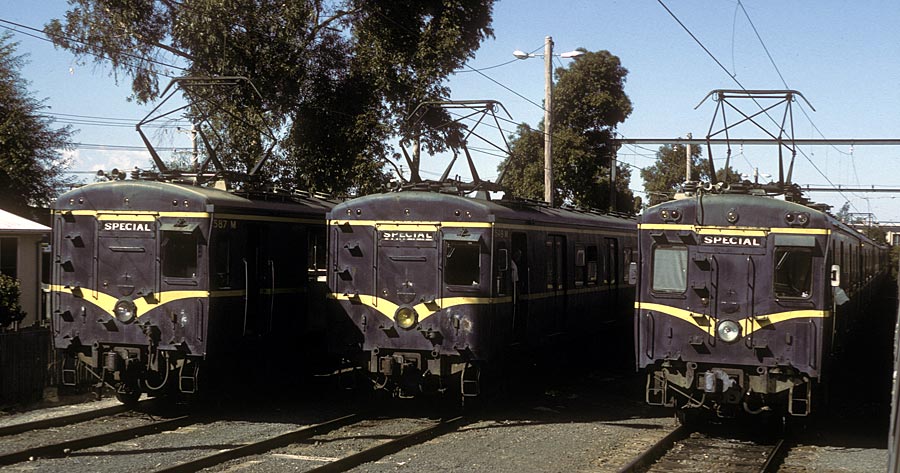
Three Harris trains stabled in the Glen Waverley Sidings.
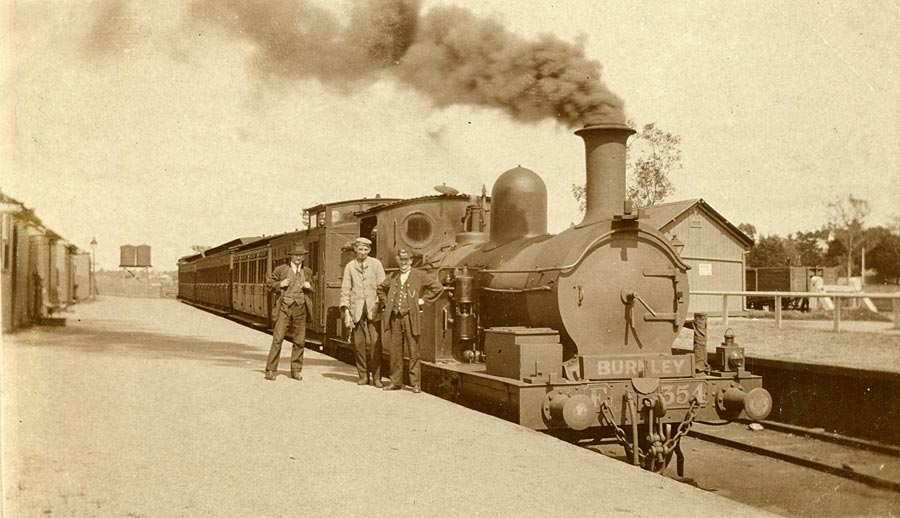
Darling to Burnley shuttle - Darling Station circa World War I.
